Instaflow | Nigeria-Canada Cross-Border Remittance Fintech App
Instaflow | Nigeria-Canada Cross-Border Remittance Fintech App

Project Overview
Instaflow App is a fintech mobile application that enables instant money transfers, bill settlements, and currency conversion from Nigeria to Canada.
Instaflow App is a fintech mobile application that enables instant money transfers, bill settlements, and currency conversion from Nigeria to Canada.

Year
2026
Client
InstaFlow
Services
Fintech
[1] Problem Statement
"In 2024, over 112,000 Nigerians made Canada their new home, carrying with them not just luggage but lifelines — monthly financial commitments to family members thousands of kilometers away. For these immigrants, sending money home isn't a convenience; it's a responsibility. Yet the experience of moving Naira from Lagos to Toronto (and Canadian Dollars back) remains frustratingly complex, opaque, and expensive."
1.1 Market Context & Research Data
The Nigeria-Canada remittance corridor sits at the intersection of massive demographic shifts and severe economic volatility. Understanding this context is essential for grounding your design decisions in real user needs.
Nigerian Diaspora in Canada — Key Statistics:
Metric | Value | Source |
|---|---|---|
Nigerian immigrants in Canada (2024) | 112,065 | Immigration Statistics Canada |
Estimated total diaspora (incl. descendants) | 90,000-120,000 | Nigerians in Diaspora Commission |
Average annual remittance per sender | ~$1,450 CAD | LSIC Analysis |
"In 2024, over 112,000 Nigerians made Canada their new home, carrying with them not just luggage but lifelines — monthly financial commitments to family members thousands of kilometers away. For these immigrants, sending money home isn't a convenience; it's a responsibility. Yet the experience of moving Naira from Lagos to Toronto (and Canadian Dollars back) remains frustratingly complex, opaque, and expensive."
1.1 Market Context & Research Data
The Nigeria-Canada remittance corridor sits at the intersection of massive demographic shifts and severe economic volatility. Understanding this context is essential for grounding your design decisions in real user needs.
Nigerian Diaspora in Canada — Key Statistics:
Metric | Value | Source |
|---|---|---|
Nigerian immigrants in Canada (2024) | 112,065 | Immigration Statistics Canada |
Estimated total diaspora (incl. descendants) | 90,000-120,000 | Nigerians in Diaspora Commission |
Average annual remittance per sender | ~$1,450 CAD | LSIC Analysis |
[2] Action — The Research Phase
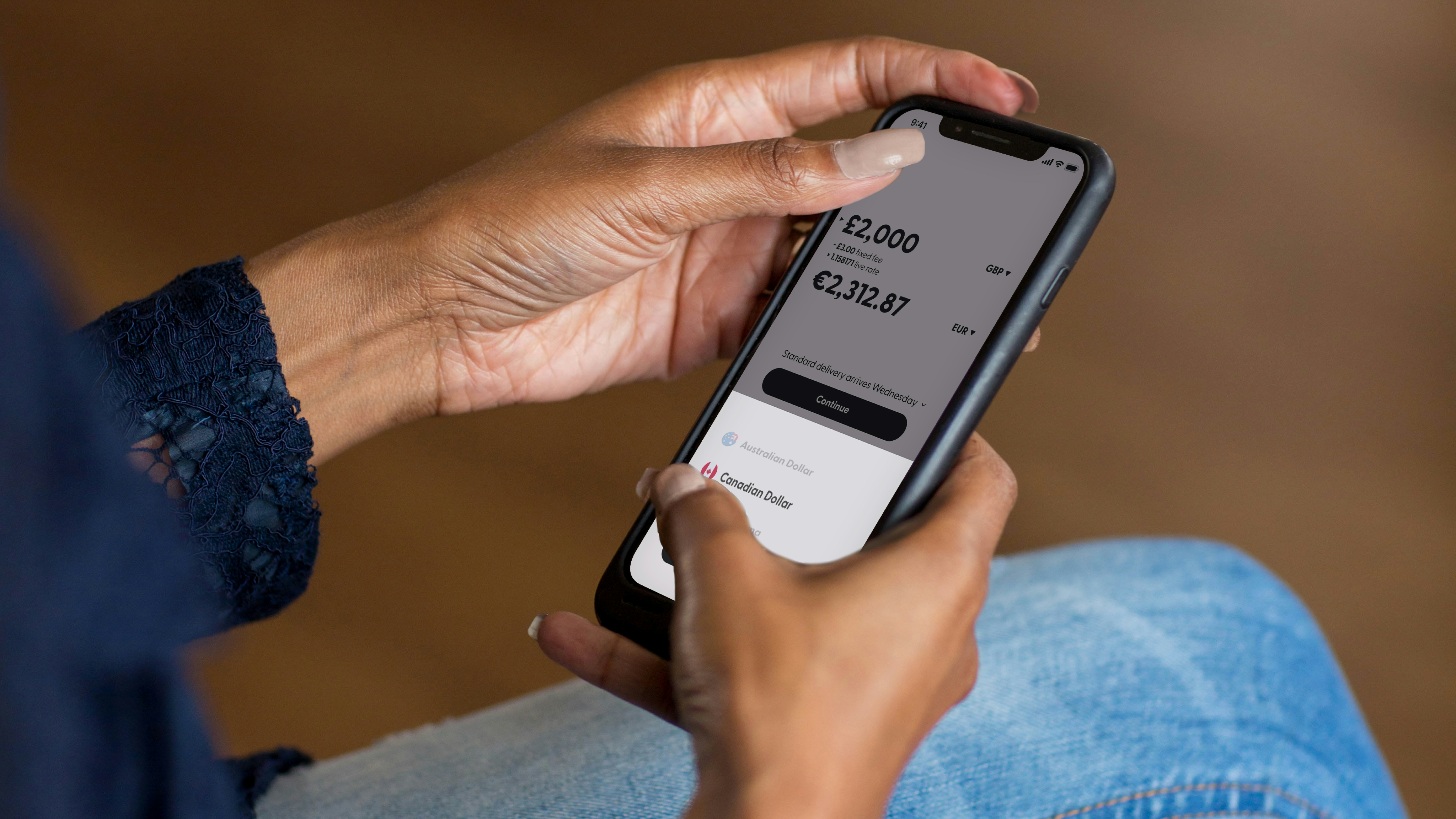
"Our research revealed a critical insight: users don't think in terms of exchange rates — they think in terms of what their family receives.
For instance, when a user sends CAD $300, he doesn't care about the Naira per dollar rate. He cares that his parents receive exactly ₦350,000. This insight fundamentally shaped our transfer flow, moving from a rate-first design to a recipient-amount-first design that reverse-calculates the exchange rate."
"During diary studies, we observed that users checked exchange rates 3-4 times daily during volatile periods. Rather than treating this as a pre-transfer activity, we designed a persistent rate ticker on the home screen and push notification system for significant rate movements — turning a passive worry into an active app engagement driver."
"Our research revealed a critical insight: users don't think in terms of exchange rates — they think in terms of what their family receives.
For instance, when a user sends CAD $300, he doesn't care about the Naira per dollar rate. He cares that his parents receive exactly ₦350,000. This insight fundamentally shaped our transfer flow, moving from a rate-first design to a recipient-amount-first design that reverse-calculates the exchange rate."
"During diary studies, we observed that users checked exchange rates 3-4 times daily during volatile periods. Rather than treating this as a pre-transfer activity, we designed a persistent rate ticker on the home screen and push notification system for significant rate movements — turning a passive worry into an active app engagement driver."

[3] Action — The Design Phase
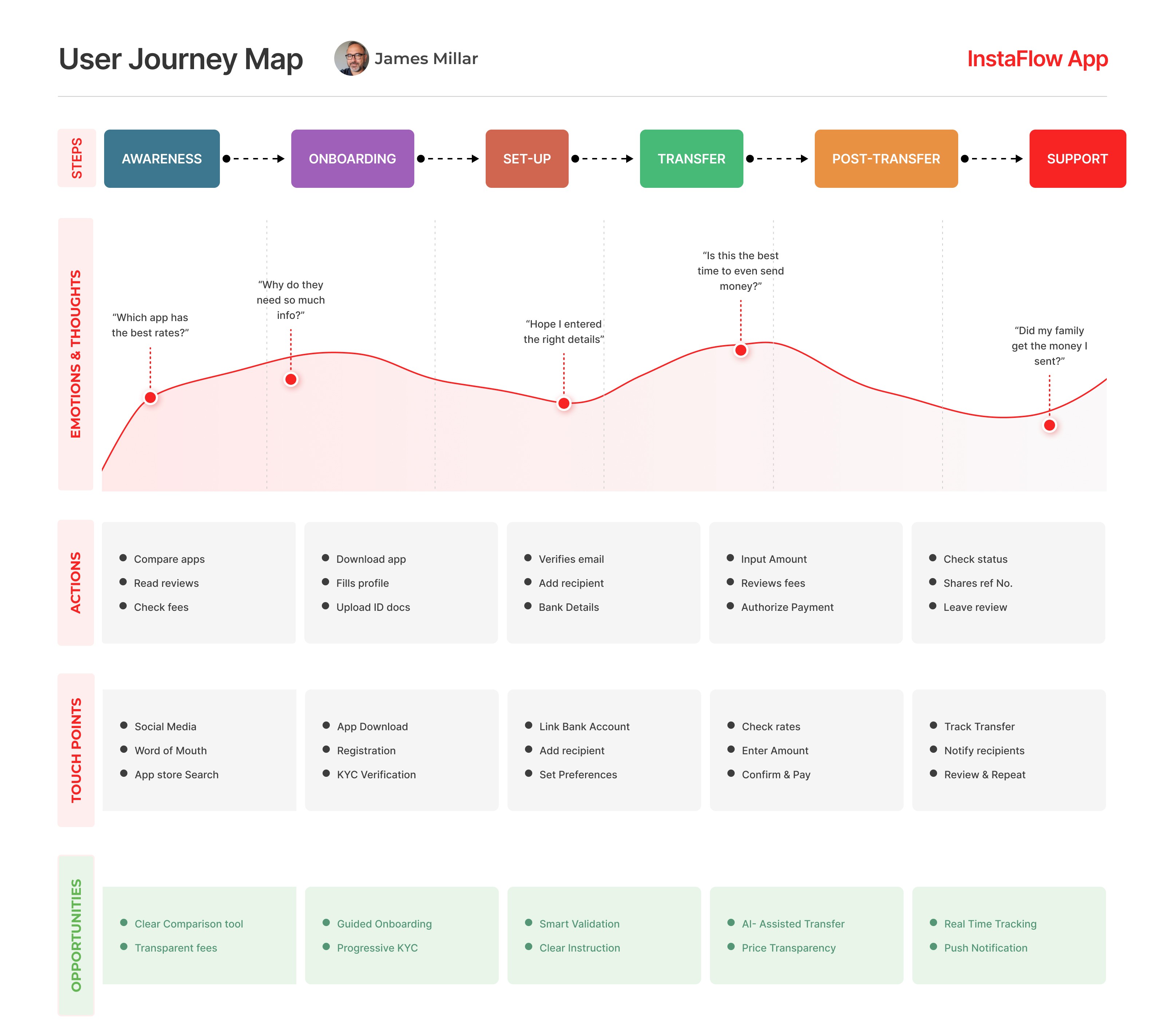
As the Lead Product Designer, I owned the end-to-end UX for the Nigeria-Canada remittance corridor — from initial user research through to production-ready UI. I worked within a cross-functional pod consisting of a Product Manager, 3 Engineers, a Compliance Officer, and a Data Analyst. My scope covered the mobile app experience (iOS and Android) for both senders in Nigeria and recipients in Canada, with specific focus on three core flows: instant money transfer, bill settlement, and currency conversion.
As the Lead Product Designer, I owned the end-to-end UX for the Nigeria-Canada remittance corridor — from initial user research through to production-ready UI. I worked within a cross-functional pod consisting of a Product Manager, 3 Engineers, a Compliance Officer, and a Data Analyst. My scope covered the mobile app experience (iOS and Android) for both senders in Nigeria and recipients in Canada, with specific focus on three core flows: instant money transfer, bill settlement, and currency conversion.


[4] The Testing & Iteration Phase
Six months post-launch, the redesigned app achieved a first-transfer completion rate of 63% (vs. 48% industry benchmark), surpassing our 60% target.
Day-30 retention reached 42%, up from 32% at launch. Most significantly, support tickets related to 'unclear fees' dropped by 67% — a direct result of the radical transparency approach in the review screen redesign.
The app maintained a 4.6★ rating on both App Store and Google Play, with the most common positive review citing 'finally knowing exactly what my family receives.
Six months post-launch, the redesigned app achieved a first-transfer completion rate of 63% (vs. 48% industry benchmark), surpassing our 60% target.
Day-30 retention reached 42%, up from 32% at launch. Most significantly, support tickets related to 'unclear fees' dropped by 67% — a direct result of the radical transparency approach in the review screen redesign.
The app maintained a 4.6★ rating on both App Store and Google Play, with the most common positive review citing 'finally knowing exactly what my family receives.

[5] Reflection & Next Steps
What Worked
"Progressive KYC was the right call. Initial stakeholder pushback favored completing all verification upfront, but our research showed that letting users explore the app before full KYC increased completion rates by 22%. The key was designing a clear 'unlock full features' path that made the value of completion obvious."
This validates the pattern used by leading fintech apps like Revolut and Cash App, where users can explore before committing to full verification.
What I'd Do Differently
"If I were to revisit this project, I would invest more heavily in recipient-side UX research. Our design focused primarily on senders (in Nigeria), but recipients (in Canada) have their own pain points — particularly around converting received Naira to CAD and understanding Canadian tax implications. A future iteration would include a dedicated 'recipient portal' with conversion tools and educational content.
What Worked
"Progressive KYC was the right call. Initial stakeholder pushback favored completing all verification upfront, but our research showed that letting users explore the app before full KYC increased completion rates by 22%. The key was designing a clear 'unlock full features' path that made the value of completion obvious."
This validates the pattern used by leading fintech apps like Revolut and Cash App, where users can explore before committing to full verification.
What I'd Do Differently
"If I were to revisit this project, I would invest more heavily in recipient-side UX research. Our design focused primarily on senders (in Nigeria), but recipients (in Canada) have their own pain points — particularly around converting received Naira to CAD and understanding Canadian tax implications. A future iteration would include a dedicated 'recipient portal' with conversion tools and educational content.

