Project Overview
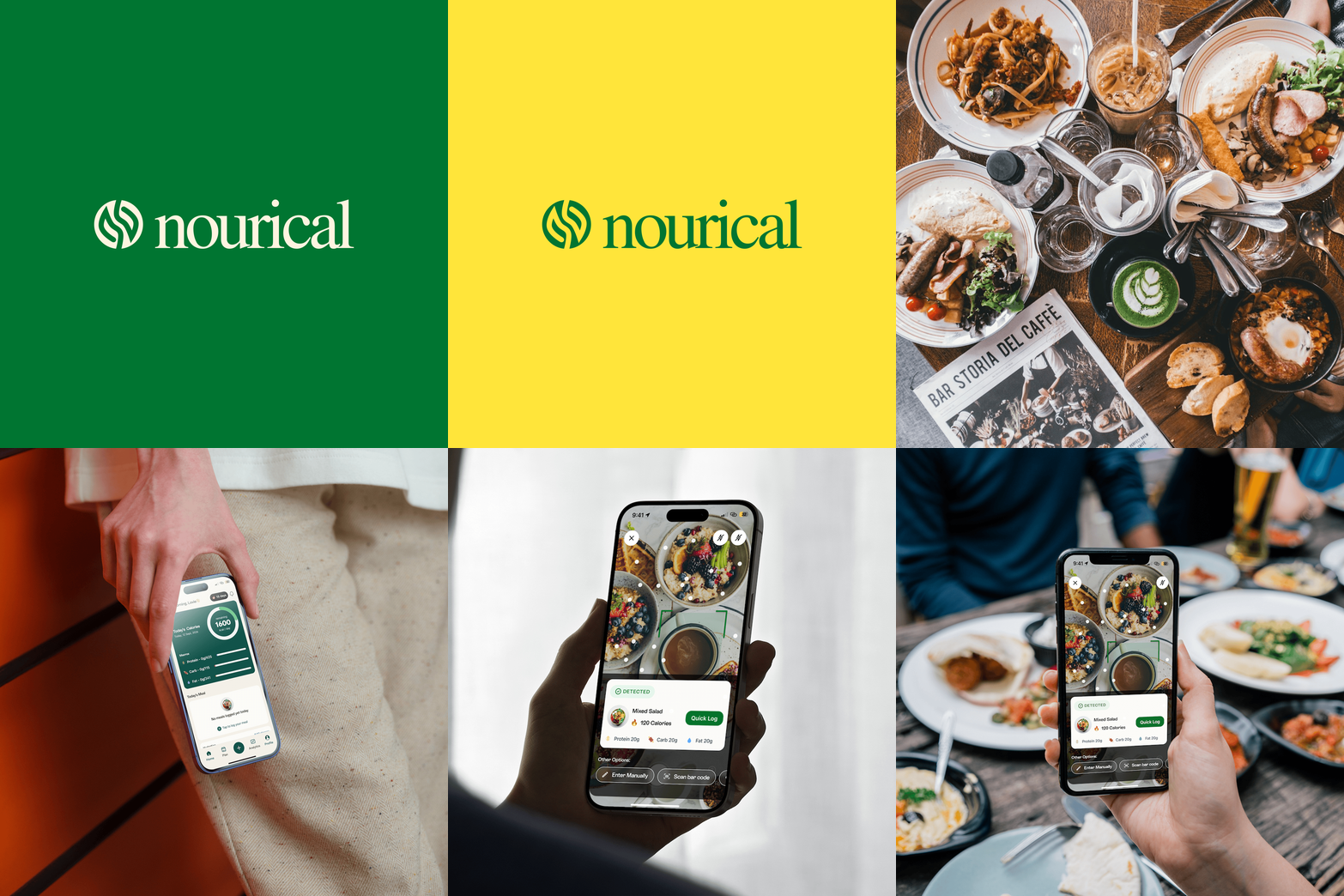
Nourical App is an AI-powered nutrition mobile application that leverages machine learning for food photo recognition, personalized meal recommendations, AI-driven coaching conversations, and intelligent meal planning.
Nourical App is an AI-powered nutrition mobile application that leverages machine learning for food photo recognition, personalized meal recommendations, AI-driven coaching conversations, and intelligent meal planning.

Year
2026
Client
Nourical
Services
Nutrition
[1] Problem Statement
"In 2024, over 1.4 billion people worldwide turned to their phones to answer a question humans have struggled with for millennia: what should I eat? Yet despite the explosion of nutrition apps, the fundamental user experience remains broken. Manual food logging feels like homework. Generic meal plans ignore real lives. And most apps quietly shame users into abandoning them within three weeks. We set out to build something different — an AI-powered nutrition companion that understands not just what's on your plate, but who you are, what you value, and how to help you build habits that actually stick."
"In 2024, over 1.4 billion people worldwide turned to their phones to answer a question humans have struggled with for millennia: what should I eat? Yet despite the explosion of nutrition apps, the fundamental user experience remains broken. Manual food logging feels like homework. Generic meal plans ignore real lives. And most apps quietly shame users into abandoning them within three weeks. We set out to build something different — an AI-powered nutrition companion that understands not just what's on your plate, but who you are, what you value, and how to help you build habits that actually stick."
[2] Action — The Research Phase
A strong AI product case study demonstrates multiple research methods spanning qualitative, quantitative, and technical domains.
Research Method | When to Use | Expected Output | AI-Specific Value |
|---|---|---|---|
Stakeholder Interviews | Week 1-2 | Business requirements, ML constraints, nutrition guidelines | Aligns UX with model capabilities |
Competitive Audit | Week 1-2 | Feature gap analysis, UX pattern library, AI capability mapping | Identifies where AI creates differentiation |
User Interviews (10-15 participants) | Week 2-4 | Personas, mental models, logging behavior insights | Uncovers emotional relationship with food |
- User Persona based on nutrition app user research and behavioral psychology literature.
- User Journey Map that visualizes Maya's experience from skeptical downloader to empowered habit-builder.
A strong AI product case study demonstrates multiple research methods spanning qualitative, quantitative, and technical domains.
Research Method | When to Use | Expected Output | AI-Specific Value |
|---|---|---|---|
Stakeholder Interviews | Week 1-2 | Business requirements, ML constraints, nutrition guidelines | Aligns UX with model capabilities |
Competitive Audit | Week 1-2 | Feature gap analysis, UX pattern library, AI capability mapping | Identifies where AI creates differentiation |
User Interviews (10-15 participants) | Week 2-4 | Personas, mental models, logging behavior insights | Uncovers emotional relationship with food |
- User Persona based on nutrition app user research and behavioral psychology literature.
- User Journey Map that visualizes Maya's experience from skeptical downloader to empowered habit-builder.


[3] Action — The Design Phase
As the Lead Product Designer, I owned the end-to-end UX for an AI-powered nutrition app — from initial user research through to production-ready UI.
I worked within a cross-functional squad consisting of a Product Manager, 1 ML Engineers, 2 Mobile Engineers. My scope covered the iOS and Android mobile experience, with particular focus on three AI-driven core flows:
1. Intelligent food photo logging
2. Conversational AI nutrition coaching
3. Personalized weekly meal planning.
I also led the behavior design strategy, applying the BJ Fogg Behavior Model to transform occasional app usage into sustainable daily habits."
As the Lead Product Designer, I owned the end-to-end UX for an AI-powered nutrition app — from initial user research through to production-ready UI.
I worked within a cross-functional squad consisting of a Product Manager, 1 ML Engineers, 2 Mobile Engineers. My scope covered the iOS and Android mobile experience, with particular focus on three AI-driven core flows:
1. Intelligent food photo logging
2. Conversational AI nutrition coaching
3. Personalized weekly meal planning.
I also led the behavior design strategy, applying the BJ Fogg Behavior Model to transform occasional app usage into sustainable daily habits."


[4] The Testing & Iteration Phase
Task | Success Criteria | What We Tested |
|---|---|---|
Log a home-cooked meal via photo | Food identified correctly >=80% | Photo recognition accuracy, correction UI |
Log a restaurant meal via photo | Multi-item identification, portion estimation | Complex meal handling,confidence display |
Ask AI coach a nutrition question | Relevant, accurate, appropriately scoped answer | Conversational AI quality, safety guardrails |
Generate a weekly meal plan | Plan generated within 5 seconds, matches preferences | Personalization algorithm, dietary constraint handling |
Task | Success Criteria | What We Tested |
|---|---|---|
Log a home-cooked meal via photo | Food identified correctly >=80% | Photo recognition accuracy, correction UI |
Log a restaurant meal via photo | Multi-item identification, portion estimation | Complex meal handling,confidence display |
Ask AI coach a nutrition question | Relevant, accurate, appropriately scoped answer | Conversational AI quality, safety guardrails |
Generate a weekly meal plan | Plan generated within 5 seconds, matches preferences | Personalization algorithm, dietary constraint handling |

[5] Reflection & Next Steps
What Worked
"Transparent AI was our best design decision. Every other AI nutrition app we tested presented machine learning output as absolute truth. By surfacing confidence scores, explaining reasoning, and making correction delightful rather than punitive, we built trust that competitors couldn't match. Our AI feedback acceptance rate of 87% far exceeds the industry average of ~60%."
What I'd Do Differently
"If I were to revisit this project, I would invest more heavily in cultural cuisine diversity from day one. Our initial AI model performed well on Western foods but struggled with South Asian, African, and Latin American cuisines — which represented a significant portion of our user base. We addressed this post-launch, but early investment in diverse training data would have prevented the 'AI doesn't understand my food' frustration that affected our first-month retention."
What Worked
"Transparent AI was our best design decision. Every other AI nutrition app we tested presented machine learning output as absolute truth. By surfacing confidence scores, explaining reasoning, and making correction delightful rather than punitive, we built trust that competitors couldn't match. Our AI feedback acceptance rate of 87% far exceeds the industry average of ~60%."
What I'd Do Differently
"If I were to revisit this project, I would invest more heavily in cultural cuisine diversity from day one. Our initial AI model performed well on Western foods but struggled with South Asian, African, and Latin American cuisines — which represented a significant portion of our user base. We addressed this post-launch, but early investment in diverse training data would have prevented the 'AI doesn't understand my food' frustration that affected our first-month retention."

