Designing an all-in-one system to Sell, Deliver and Get Paid Securely
Designing an all-in-one system to Sell, Deliver and Get Paid Securely

Project Overview
Vendyz is the social commerce infrastructure that helps African sellers grow - with escrow protection, instant payouts and nationwide delivery. By layering this financial security with seamless nationwide delivery management, Vendyz transforms fragmented social media transactions into professional, dependable e-commerce channels, enabling sellers to focus purely on product and customer acquisition.
Vendyz is the social commerce infrastructure that helps African sellers grow - with escrow protection, instant payouts and nationwide delivery. By layering this financial security with seamless nationwide delivery management, Vendyz transforms fragmented social media transactions into professional, dependable e-commerce channels, enabling sellers to focus purely on product and customer acquisition.

Year
2025
Client
Vendyz
Services
Fintech & Social Commerce
[1] Problem Statement
Social commerce in Africa is booming but broken. Sellers struggle with manual processes, and buyers are terrified of being scammed.
The Core Friction
In peer-to-peer and B2B transactions, trust asymmetry kills deals. Buyers fear sending money to strangers who might disappear. Sellers fear delivering work/goods without guaranteed payment. Existing solutions (PayPal, wire transfers) lack neutral third-party protection, while traditional escrow services are slow, expensive, and buried in legal complexity.
Business Context
The founder identified a gap: 47% of freelance contracts fail due to payment disputes (internal market scan), yet existing escrow tools were built for real estate and enterprise—not for the growing gig economy and digital goods market.
Key Questions
How do we make escrow feel fast and lightweight rather than bureaucratic?
How do we design transparency so both parties feel in control?
How do we reduce drop-off in a multi-step, high-cognitive-load financial process?
How do we build trust in the platform itself as a neutral arbiter?
Social commerce in Africa is booming but broken. Sellers struggle with manual processes, and buyers are terrified of being scammed.
The Core Friction
In peer-to-peer and B2B transactions, trust asymmetry kills deals. Buyers fear sending money to strangers who might disappear. Sellers fear delivering work/goods without guaranteed payment. Existing solutions (PayPal, wire transfers) lack neutral third-party protection, while traditional escrow services are slow, expensive, and buried in legal complexity.
Business Context
The founder identified a gap: 47% of freelance contracts fail due to payment disputes (internal market scan), yet existing escrow tools were built for real estate and enterprise—not for the growing gig economy and digital goods market.
Key Questions
How do we make escrow feel fast and lightweight rather than bureaucratic?
How do we design transparency so both parties feel in control?
How do we reduce drop-off in a multi-step, high-cognitive-load financial process?
How do we build trust in the platform itself as a neutral arbiter?

[2] Action — The Research Phase
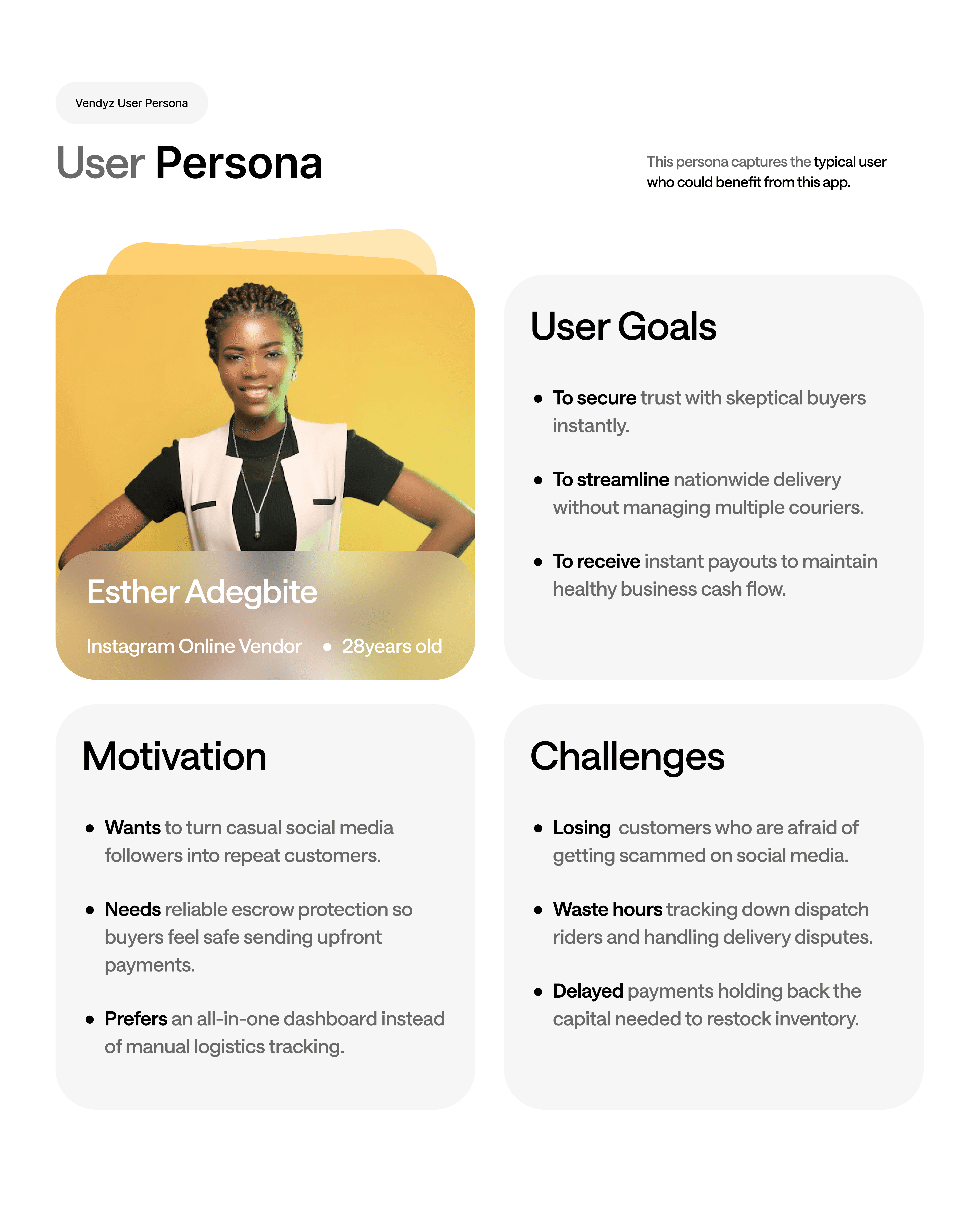
We conducted contextual inquiries (observing 8 Instagram and WhatsApp merchants managing daily orders) and ran a quantitative survey with 150 frequent social commerce buyers.
Micro-Moments of Friction (The Discovery)
My research revealed two massive psychological and environmental roadblocks that standard e-commerce platforms ignore:
The "DM for Price" Friction (Trust Constraint): Buyers experience immediate fatigue when prices aren't transparent. However, sellers hide prices to force direct engagement. This creates an immediate drop-off point where upfront skepticism kills the transaction before a conversation even begins.
The Logistics Waiting Game (Operational Constraint): Sellers spend an average of 45 minutes daily manually haggling with fragmented dispatch riders over delivery rates. If a vendor takes longer than 15 minutes to confirm a shipping fee to a buyer, the buyer shifts focus, leading to a massive cart-abandonment rate in the DMs.
We conducted contextual inquiries (observing 8 Instagram and WhatsApp merchants managing daily orders) and ran a quantitative survey with 150 frequent social commerce buyers.
Micro-Moments of Friction (The Discovery)
My research revealed two massive psychological and environmental roadblocks that standard e-commerce platforms ignore:
The "DM for Price" Friction (Trust Constraint): Buyers experience immediate fatigue when prices aren't transparent. However, sellers hide prices to force direct engagement. This creates an immediate drop-off point where upfront skepticism kills the transaction before a conversation even begins.
The Logistics Waiting Game (Operational Constraint): Sellers spend an average of 45 minutes daily manually haggling with fragmented dispatch riders over delivery rates. If a vendor takes longer than 15 minutes to confirm a shipping fee to a buyer, the buyer shifts focus, leading to a massive cart-abandonment rate in the DMs.
[3] Action — The Design Phase
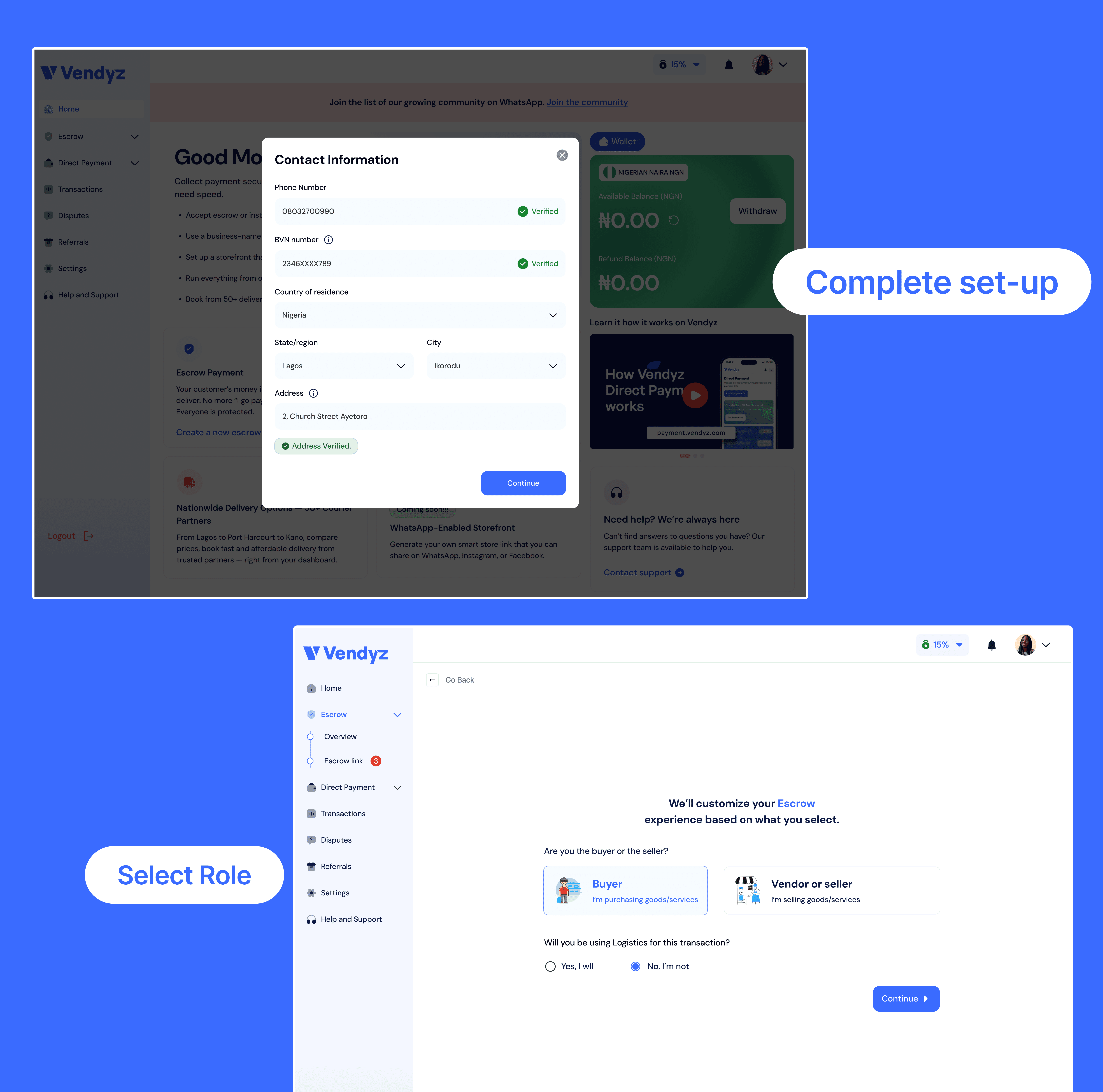
My Role - Lead Product Designer
I was responsible for:
Product discovery & UX strategy
User flows and interaction design
High-fidelity UI design (Website + Web app + admin system)
Design system and component library
My Role - Lead Product Designer
I was responsible for:
Product discovery & UX strategy
User flows and interaction design
High-fidelity UI design (Website + Web app + admin system)
Design system and component library




[4] The Testing & Iteration Phase
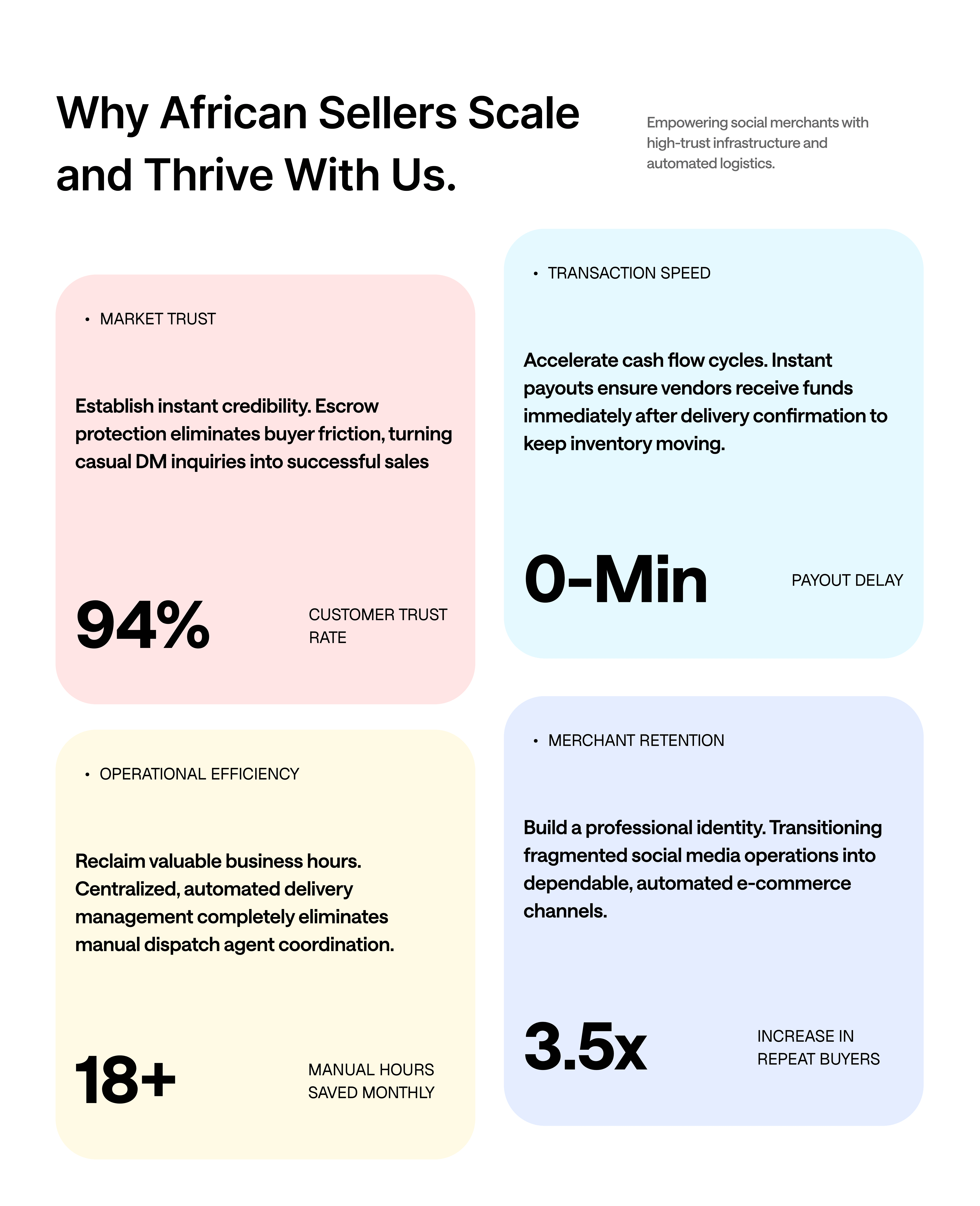
This landing page served as the primary funnel for the platform's launch, delivering tangible business results:
6,000+ User Signups driven through the optimized funnel.
Sub-second load times, reducing bounce rates significantly.
High conversion rate for the Waitlist and Beta launch.
This landing page served as the primary funnel for the platform's launch, delivering tangible business results:
6,000+ User Signups driven through the optimized funnel.
Sub-second load times, reducing bounce rates significantly.
High conversion rate for the Waitlist and Beta launch.

[5] Reflection & Next Steps
What Worked
The timeline metaphor was the highest-impact design decision. It transformed an abstract financial state into a concrete, trustworthy visual.
Progressive disclosure in agreements dramatically reduced legal intimidation without sacrificing enforceability.
Mobile-first was non-negotiable. Our users lived on phones; designing desktop-first would have killed adoption.
What I'd Do Differently
Earlier accessibility focus: We passed WCAG 2.1 AA but retrofitted color contrast and screen reader support. Building it in from the start would have been faster.
More diverse recruitment in research: Our sample skewed toward tech-savvy freelancers. Non-digital-native sellers (e.g., tradespeople) might have surfaced different friction points.
Dispute resolution needs more iteration: The 75% success rate in testing and 4.5% escalation rate are good, but emotionally charged disputes need more human-centered design. The "slider" tool works logically but may feel cold in high-stakes situations.
What Worked
The timeline metaphor was the highest-impact design decision. It transformed an abstract financial state into a concrete, trustworthy visual.
Progressive disclosure in agreements dramatically reduced legal intimidation without sacrificing enforceability.
Mobile-first was non-negotiable. Our users lived on phones; designing desktop-first would have killed adoption.
What I'd Do Differently
Earlier accessibility focus: We passed WCAG 2.1 AA but retrofitted color contrast and screen reader support. Building it in from the start would have been faster.
More diverse recruitment in research: Our sample skewed toward tech-savvy freelancers. Non-digital-native sellers (e.g., tradespeople) might have surfaced different friction points.
Dispute resolution needs more iteration: The 75% success rate in testing and 4.5% escalation rate are good, but emotionally charged disputes need more human-centered design. The "slider" tool works logically but may feel cold in high-stakes situations.

